Who am I and where/who is my tribe?

Written 10.9.2017 published 14.12.2025

Once a year I hope to read a good book, interesting maybe, a page turner if possible but when I read one that profoundly moves me then that’s when I get really excited and perplexed all at the same time. I recently read ‘Tribe’ by Sebastian Junger but prior to this I had listened to a number of podcasts by Daniel Strauss, Raspberry Ape Episode 27 that had talked about ‘Tribe”. I find myself listening to more podcasts this year mainly hosted by men and conversations on BJJ, MMA, the mindset of celebrities, scientific research on reishi, lion’s mane, gut ad more; I was intrigued to hear continual conversations about where we belong. I guess you take it for granted you know where you’re from, familial life, heritage, ethinicity. I read a quote today that said “Every next level of your life will demand a different you”, now that is true. I am not the same person I was 3 years ago, even 10 years ago but is that because my “tribe” changes and therefore I change? Or is it because I change depending on who I’m with, partner, circumstances, various friends, family, work?

I looked up the word “Tribe” just to truly understand in my mind what this word actually means. Independently, I would say it was a “label” that defines a group of people who travel, live, grow up together, share experiences and are nomads. There is something historical about the word as if it should be extinct and we refer to it in the history books.  But I know how modern society loves to label so the label has stuck to differentiate us rather than positively define us.

The general meaning I found online from a few dictionaries was “a social division in a traditional society consisting of families or communities…” Wikipedia described a tribe as “dependent on their land for their livelihood, who are largely self-sufficient, and not integrated into the national society”. (Funny, I thought a tribe would be it’s own society?).

Does the word tribe make us ask the existential question, “who am I if I don’t have a tribe and where do I fit in if at all?” The book certainly did for me, Sebastian discusses being among soldiers of war and that feeling of safety, everyone rallying around you, this stranger will die for me and will die to protect me. The only time I sense this is with “family”. I have always believed this is how family feel about one another, but being an adult I’m not so sure if this is true? The microcosm is never a reflection of the macrocosm and that’s when the struggle begins.

So, thinking back on a group that is self-suffient, dependent on the land and living by your values within a group that has chosen it and decided to live their life by it sounds great, right? Then why can’t we be happy without the excesses in our lives, without the luxuries, without the choices. We have accepted capitalism and consumerism to become a way of life, a way of defining ourselves over others, a way of measuring our successes and failures. Who says it’s a failure to oppose that lifestyle and choose a different lifestyle. We analyse celebrity exposure as a way of seeing vast amounts of wealth that cannot equate to personal happiness or satisfaction. And I asked myself to answer some of these questions, I need to ask in all of this who is my tribe? Because the question came from a podcast discussing BJJ and the bond you build on the mats, I looked ay my gym buddy tribes. I have a boxing tribe, a Ladies that Lift tribe, friends, family all that I would call tribes. The problem is I felt confused, l really couldn’t tell you where I am from, a part of my ancestral tribe it unknown to me. I know I have Egyptian and Mauritian blood in me, but could I tell you about my grandparents or there parents, no.

My tribe are what close family I have left and that consists of seven people, how do I define myself in the world with such a small number? do I need to? I do define myself by my work, my friends, the people I socialise with, my partner because they have contributed to who I am. And who I am is no longer definable by heritage, generations of the past, environmental, sociological or anthropological past but who I am in the here and now. But my DNA can tell me who I was related to, my gene cells will define my predictive behaviour based on past generations, my medical history can be deduced from my ancestors but in the 21st Century I do not think of who I am defined by history but by my tribe and my tribe changes with time.

Today I ask again who am I and who, where are my tribe? My Dad shell shocked me last year with telling me he was married and still is and that I have a half brother. Today I met my brother and questioned my existence as to who am I? My identity, my name, being female, my role in the family, was I grateful I got to spend more years with my strict, religious, over protective father or now knowing his fear of being an illegal immigrant for so long explains why he was such a controlling man. I never knew he was a muslim and I never knew he was married. In fact, there’s a lot I don’t know about him but maybe that is “generational thing”. So many secrets, so many lies, one wishes to forget so you do now have to confirm or affirm which is which especially if you do not remember.

What moved me the most in ‘Tribe’ was the loss soldiers felt when returning to society. How do we as a Society comprehend what those who train in the skills required to save lives and develop whatever it takes physically, mentally, visually and psychologically to deal with trauma; I cannot fathom it. I cannot imagine it, I am in awe of it. I find writing incredibly cathartic and everyone has a story to tell. I am sure my history would be a 12 boxset season on Netflix. What also moved me, was the question “what am I doing to make a difference in the world?”. Am I procrastinating and over thinking, should I be podcasting, questioning, discussing global issues and how we could change them. Who am I that someone will listen, do I know enough, will I sound stupid? But that’s insecurity talking and that is social conditioning from fear. If we could identify everything single habit, conditioning, constructs, victorian attitudes, values and listen to an honesty from within, this world would be such a different place.

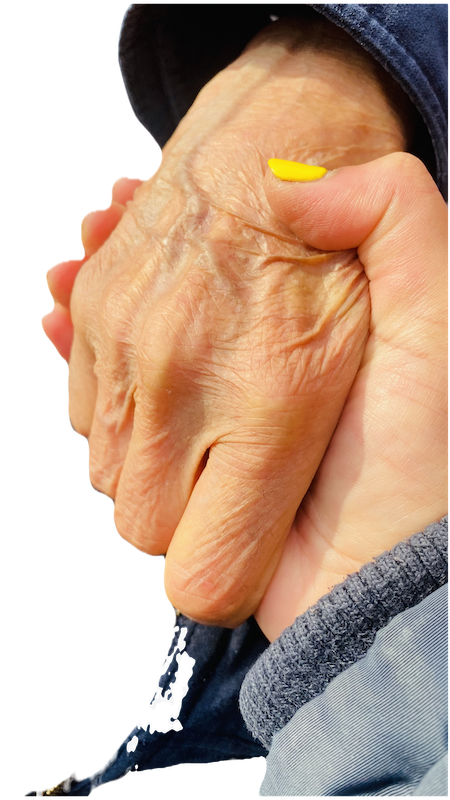
Post Grief

Maria - daughter, brown woman with blonde highlights in hair leaning her head on dad's right shoulder. Dad is a brown man in his 80s with a cream shirt on with brown collars.

Autumn has truly arrived with nature transitioning from light to dark, the warm breath of the breeze on our skins, the beautiful red and yellow leaves strewn on the pavements reminding me of the cycle of decay and death. I am reminded of this time last year and not knowing how long I would have with dad. I remember bringing a red leaf and giving it to him, an internal sign, a moment of how I would not see him through another winter.
This pre-winter grief has lasted for years in different stages, and over seasons and cycles. My heart is heavy with loss and I know I am not the only person who is grieving and has lost this year. So many friends have lost a loved one, so many have reached out to empathise, to remember and for those who are going through it anew. I am lost for words. They are recycled and I wish I could offer new ones.
I am still going through the following and I know its because, I could not process these at the time.

No one tells you that once all the services that were in place for your dad stops, there is no service that continues for you bar one, therapy which I pay for. Whom do you turn to when society and its structures are set up for you to deal with grief in two weeks when I have been dealing with it for eight years.
I rang Admiral Nurses after dad died to say thank you, and had a lovely conversation on the phone to a nurse but I felt guilty that I was taking up someone else’s space.
Guilt never ends, it seeps through at different moments as the memories come and go over time. All the arguments I ever had, pre and post knowing the diagnosis of dementia. All the times I never stayed with dad, as I worked long hours, or made up for working late due to being in hospital, the guilt of not working enough, of not being there for others, of not being there for myself or my husband. Guilt of what I should have done, or should have said in defence, of not being strong enough or standing up for myself enough.
Guilt is an ugly voice, it’s the internal voice of shame, it’s sharp edges prods and pokes you into self-loathing and insecurity. Guilt stops you from sleeping at night, it is a constant replay over moments, and scenarios, and ‘what ifs’. Where do I feel it, in my stomach, chocking my throat, destabilising my senses and critically analysing my words. I am shockingly drained and tired from the constant voices of guilt holding my ever faithful friend – Shame.

The voice of others or myself – although this is unique to everyone, I am sure. Shame talks to you about duty, dutiful daughter, you are the carer, what you should do because you are his and now it’s your time to give back. Shame comes from the conversations, both from people who know you and who don’t know you, from family, friends and from services. No one really believes they are shaming you because shame shows up as advice, as words of consolation and experience. I put shame in a box, i compartmentalised it until I was ready to face it, and yes that small ‘i’ is because i feel small.
Where do I feel shame in my body? In my shoulders, neck, lower back. It’s the weight I carry, not only of myself but of others and their expectations of me, of what is expected as a daughter as a carer. I never really understood what care meant in relation to gender and I now look back and realise how society’s expectations on me drained me of me.
Shame made me angry, it fires up the rage in me, it made me tough and resilient, distant, cold, numb when I shouldn’t, couldn’t, want to be those parts of me that rob me of my humanity, my joy. It wasn’t until a ‘dementia navigator’ asked me how I was and vulnerability showed itself. I cried, no I sobbed. No one had asked me how i was doing. I hadn’t asked me how i was doing in a long time, because gradually there was no i. Shame and guilt make you feel selfish for even thinking about you. It uncovers vulnerability.
My body has never been the same these last eight years, it’s older, slower, bigger, bulgier and I look different. My body, my face has reflected the tiredness, the weight, the heaviness of shame. Shame has shaped, manipulated, whispered dark thoughts in my soul, which has echoed through my body. If I could give my therapist an award, I would. The space for my shame to sit in, is there, contemplative and contained.

Vulnerability has shaken my core but I had to control being vulnerable outside, to the world of healthcare professionals, whilst internally or at home I was and still am a vulnerable mess. I had wrapped vulnerability in cast iron, seriousness, arming myself with knowledge and questions, and protecting my dad with a fierceness that I hadn’t with my mum. How could I be vulnerable in any situation with social services, GPs, oncologists, hospitals, NHS services – all of the appointments and conversations were about knowing about dad’s health. I had to be strong, be in control, look the part of the dutiful daughter, not the angry, brown woman raging inside at losing my dad. Having to deal with all of the changes, the subtle ones and the slap you in the face obvious ones. I had to stay calm and bite my tongue at every turn when I was faced with ego, condescending tones, when services were not given freely to me, when I was made to ask and ask again. When I had to tell a number of different doctors, nurses what the situation was over and over, pleading for care to be in place, a service to be given. Vulnerability has made me sensitive. Sensitive to energy around me, peoples energy/vibe. Where do I feel it in my body, in my gut. Vulnerability has stoked the fire in me, anger and rage.

This last year I have raged inside, my patience is a thin veil of ‘fuck off and leave me alone’ – alone is how I feel. Is it a feeling? Yes, but its more than that, it’s physical. It’s – I want to punch and kick a bag until I drop, it’s rain on my face along with my tears, it’s being on the bus and passing the care home with tears streaming down my face. It’s sitting alone in my living room and looking at the images of my dad and mum and knowing I can no longer call them or see them or go round to theirs for dinner. Rage is hot, cold, light, dark, being alone or surrounded by people. It is everything all at once. It is the eight months of trying to get home care from social services, it’s the carers who didn’t think outside the box, it’s the doctors who made the decision to prescribe an anti-psychotic instead of calling me to be with dad, it’s the matron who won’t listen, who dismisses and you are silenced and waves you away. It’s the doctors who won’t take your side when they see injustice and let you stand alone, it’s the doctor who tells you there’s nothing more they can do and leaves you with no hope. It’s the doctor who has made up their mind about what treatment will start without consultation and questions your research. It’s the services that ask why can’t you bring your dad to this activity when they already know you work full-time and offer no other solutions. It’s the people around who bring sweet food knowing his mood will be accelerated but they don’t have to deal with the aftermath of shouting, throwing food around and horrible words. It’s the punchbag you have had to be and accept because in not doing so may have been detrimental to dad. It is the smile on my face, the words when I write, the vows he didn’t hear, the wedding he didn’t see. I feel rage and hurt all at once and sits in the centre of my chest, heavy and raw every day.
It is the vitriol I feel toward me and it’s hard to talk about it, it’s hard to define it sometimes, it’s hard not to quietly walk away from everything and everyone. Even the closest do not understand because trauma is happening everywhere, to close to home, how much capacity do we have for ourselves and each other? Very little, if any at all… and on some days when it’s really quiet, I can hear it and I sit with it, hope.


Hope offers me a new life, a new vision, a different energy. It offers me a gratitude for a new life and choices that are mine to make me happy. Hope for the kindness to myself. Can I see the kindness of hope, the small steps that allow me to lift myself out of grief? Can the emptiness be filled? How can I ever be happy knowing that my parents are no longer there to see and share in my joy, in my journey of life. Was I that naive to think that they would live forever? No, but I hoped they would live to see more. I miss holding my dad’s hand and it is so raw to think today will be one year since we said goodbye. Hope is my siblings, my niece and the next generation. Is hope love? In many ways, yes and in some ways no. I hope that I will love me full and unconditionally and that might heal the memories of the past. Hope is my guide today and always.

Seek not my body in the past moments of joy and celebrations
Seek my soul’s divine path of forgiveness and knowing
Knowledge has held my hand and humanity has been key to its centre
Feel the words of ownership whip itself on my skin, sowing the seeds
of trauma

Patient centred care – what does that mean? Listening, giving space
To a voice otherwise marginalised, labelled, troublemaker, difficult
Advocacy for men, but what about support for women?
Regimented rules dictate a system so old, so cold sometimes, so distant
Distrusting state and healthcare that cares not for some and only others

Others that are not ‘othered’ but those elite, wealthier clients,
Friends, close knit communities, side stepping those who need care,
depend on care, medicine, welfare of those systems apparently,
in place to care, to share, to save lives and make people better.

In sickness and health do state do us part.